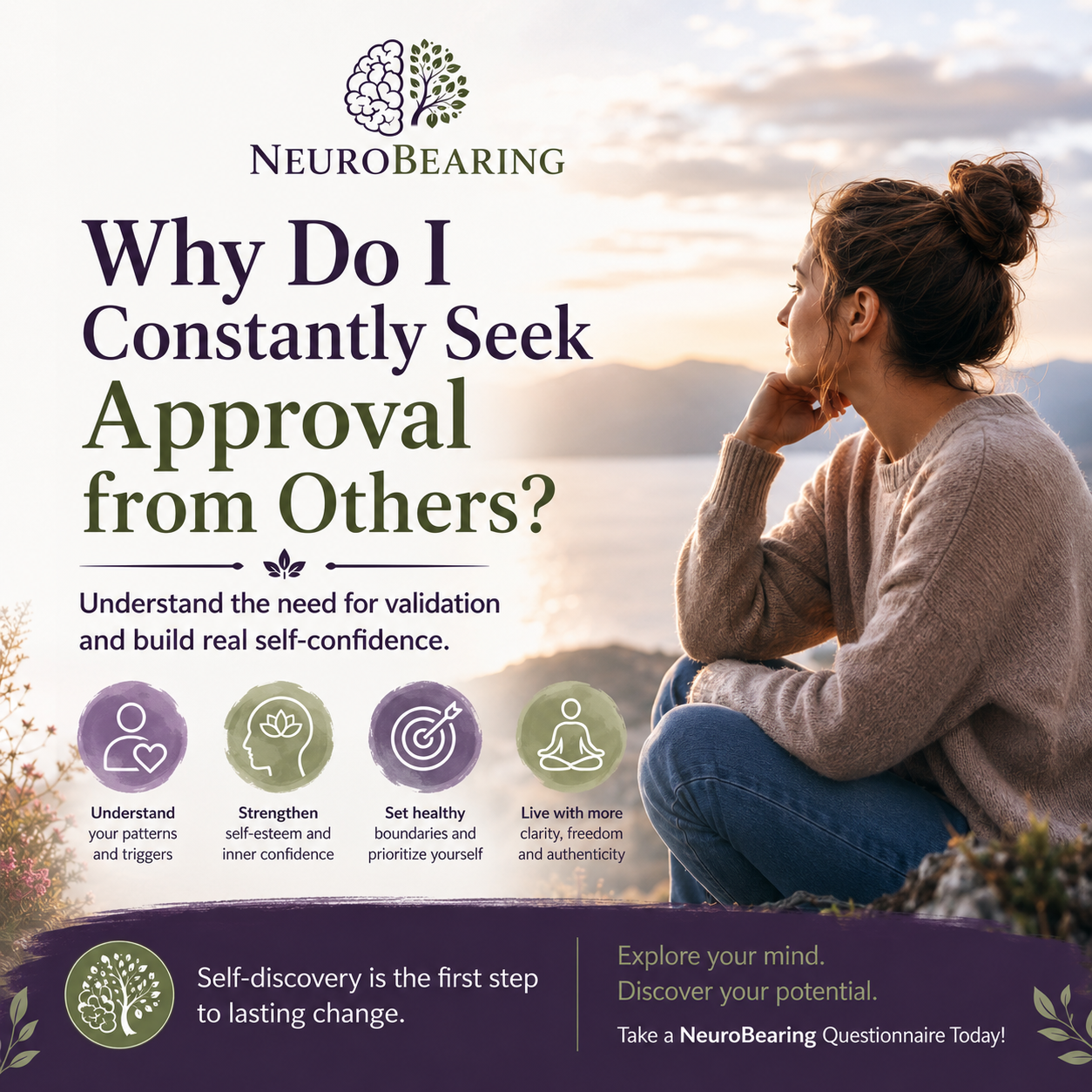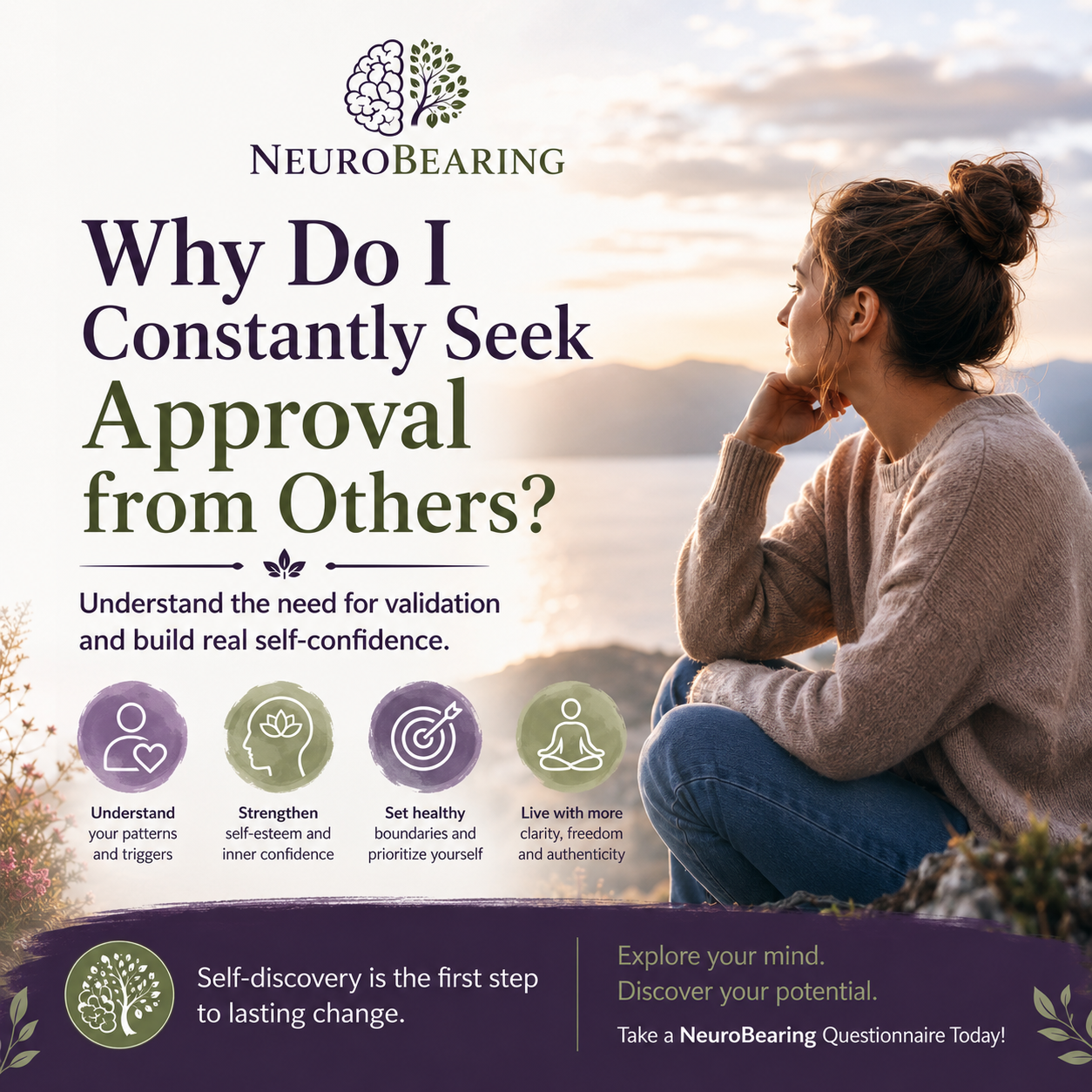
The desire to be accepted by others is a natural part of being human. From childhood onwards, people learn through relationships, social interaction, and feedback from family, friends, teachers, and colleagues. Positive encouragement helps us develop confidence, while criticism can influence how we see ourselves. Wanting others to appreciate us is perfectly normal.
However, for some people, the need for approval becomes much stronger than simple social acceptance. Their mood, confidence, and even decisions may depend heavily on what others think. They may avoid expressing opinions, constantly apologise, struggle to say “no,” or worry excessively about disappointing people. Over time, this pattern can become emotionally exhausting and may prevent individuals from living according to their own values.
Understanding why we seek approval and learning to develop confidence from within can help create healthier relationships and a stronger sense of personal identity.
What Does It Mean to Seek Approval?
Seeking approval refers to the tendency to rely on positive feedback, acceptance, or reassurance from other people in order to feel confident, valued, or secure.
Everyone appreciates compliments and encouragement. These experiences strengthen relationships and promote wellbeing. Problems may arise when external validation becomes the primary source of self-worth.
Instead of asking,
“What do I truly think?”
a person may begin asking,
“What will everyone else think?”
Over time, this shift can influence almost every important decision.
Healthy Validation Versus Approval Dependence
Healthy validation allows us to enjoy praise while maintaining confidence in our own judgement.
Approval dependence often feels different.
People may experience discomfort when others disagree with them, even if they genuinely believe they are right. They may constantly seek reassurance before making decisions or avoid situations where criticism is possible.
Rather than feeling guided by personal values, they feel guided by other people’s reactions.
Why Do Some People Need More Approval Than Others?
There is rarely a single explanation.
Our need for approval develops through a combination of personality, experiences, upbringing, and social environment.
Some individuals naturally place greater importance on relationships, while others become highly sensitive to criticism after difficult life experiences.
Common influences include:
- Growing up with frequent criticism.
- Receiving praise only after achievements.
- Wanting to avoid conflict.
- Fear of rejection.
- Low self-confidence.
- Perfectionistic tendencies.
- Strong empathy toward others.
Each person’s experiences shape how they interpret acceptance and rejection.
Common Signs of Approval-Seeking
Many people are surprised to discover how often approval influences their behaviour.
Difficulty Saying No
One of the most common signs involves agreeing to requests despite feeling overwhelmed.
People may accept additional responsibilities simply because they worry that refusing could disappoint someone.
Eventually this may lead to stress, frustration, and burnout.
Constantly Apologising
Some individuals apologise far more often than necessary.
They may apologise for asking questions, expressing opinions, or situations that are entirely beyond their control.
While politeness is valuable, excessive apologising sometimes reflects uncertainty about one’s own worth.
Fear of Disappointing Others
Approval-seeking individuals often carry a strong sense of responsibility for other people’s emotions.
They may believe they must keep everyone happy at all times.
Since this is impossible, they often experience ongoing guilt or worry.
Changing Your Personality
Another common pattern involves adjusting behaviour depending on who is present.
Instead of expressing authentic opinions, individuals may simply agree with others to avoid disagreement.
Although this creates temporary harmony, it can gradually weaken personal identity.
How Approval-Seeking Can Affect Daily Life
Relying heavily on external validation can influence many areas of life.
Relationships
Healthy relationships involve honesty and mutual respect.
When approval becomes the priority, people sometimes hide their true feelings to avoid conflict.
This may create misunderstandings and prevent genuine emotional connection.
Career Decisions
Many talented individuals avoid promotions, leadership opportunities, or career changes because they fear criticism or failure.
Rather than pursuing meaningful goals, they choose what feels safest.
Emotional Wellbeing
Constantly monitoring other people’s reactions requires considerable emotional energy.
Small disagreements may feel much larger than they actually are, leading to unnecessary stress and self-doubt.
Why Social Media Can Increase Approval-Seeking
Modern technology has introduced new ways of measuring approval.
Likes, comments, followers, and shares provide immediate feedback.
While these interactions can be enjoyable, they may also encourage people to evaluate their self-worth based on online responses.
Many individuals find themselves checking notifications repeatedly or feeling disappointed when posts receive less attention than expected.
Remember that online engagement rarely reflects a person’s true value or character.
Building Confidence From Within
Reducing approval-seeking does not mean ignoring feedback or becoming indifferent to others.
Instead, it involves developing greater confidence in your own judgement while remaining open to learning.
Recognise Your Personal Values
Ask yourself:
- What matters most to me?
- What kind of person do I want to become?
- What decisions reflect my values?
These questions help shift attention from external approval toward internal direction.
Practise Small Acts of Independence
Confidence grows gradually.
Simple actions such as expressing an honest opinion, politely declining an unnecessary request, or making decisions without asking multiple people for reassurance can strengthen self-confidence over time.
Each small success reinforces the belief that you can trust your own judgement.
Accept That Disagreement Is Normal
No one is liked by everyone.
Even highly respected individuals receive criticism.
Learning that disagreement does not automatically mean rejection is an important step toward emotional resilience.
Different opinions are part of healthy relationships and personal growth.
Learning to Accept Yourself
One of the strongest foundations of confidence is self-acceptance.
This does not mean believing you are perfect.
Instead, it means recognising both strengths and weaknesses without allowing either to define your entire identity.
People who accept themselves generally experience less pressure to constantly prove their worth to others.
They appreciate compliments while understanding that their value does not disappear when criticism occurs.
Can Self-Assessment Help?
Many people are unaware of how strongly approval influences their everyday decisions until they begin reflecting on their own behaviour.
Self-assessment questionnaires cannot diagnose psychological conditions, but they can provide valuable insight into thinking patterns, emotional responses, and interpersonal habits.
Greater awareness often becomes the first step toward meaningful personal growth.
Understanding your own tendency to seek validation can help you develop healthier confidence, stronger boundaries, and more authentic relationships.
Final Thoughts
Wanting acceptance is part of being human. Healthy relationships naturally involve encouragement, appreciation, and support from others. However, when self-worth depends primarily on external approval, it becomes difficult to make decisions confidently or express your authentic self.
Developing confidence from within is a gradual process rather than a single achievement. It involves learning to trust your judgement, accepting that disagreement is inevitable, and recognising that your value is not determined by the opinions of others.
The goal is not to stop caring about people. Instead, it is to care about yourself enough that your decisions are guided by your own values as well as your relationships. As confidence grows, many people discover greater emotional freedom, healthier boundaries, and a stronger sense of identity that remains steady regardless of external praise or criticism.
The End