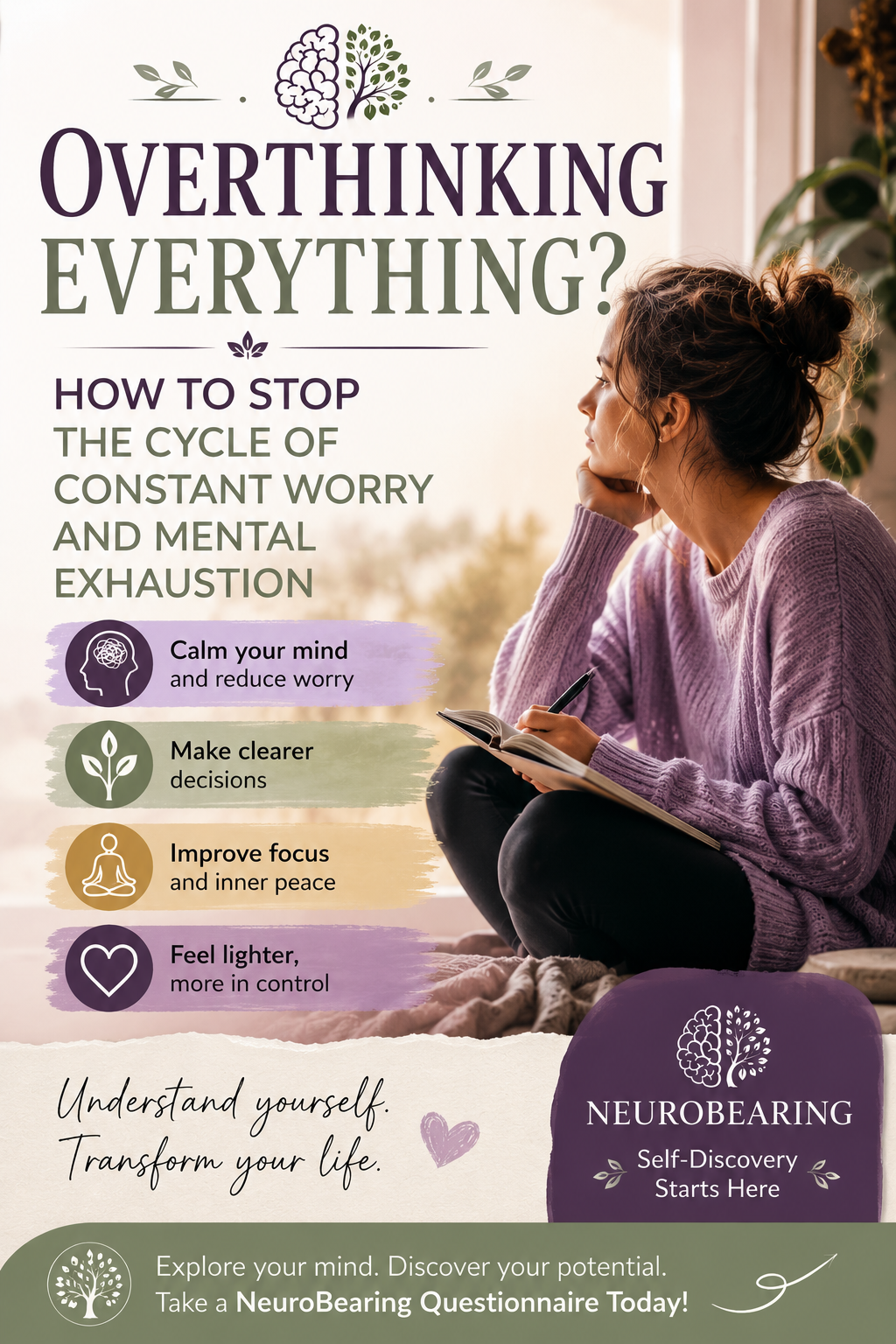
Overthinking Everything? How to Stop the Cycle of Constant Worry and Mental Exhaustion
Overthinking is something almost everyone experiences from time to time. It often begins with a simple question, a difficult decision, or an unexpected event. Before long, however, the mind starts replaying conversations, imagining different outcomes, analysing every possibility, and searching for answers that may never come. While careful thinking can help solve problems, excessive thinking often has the opposite effect. Instead of creating clarity, it creates confusion, stress, and emotional exhaustion.
Many people who overthink believe they are being productive because they are trying to understand every detail before acting. In reality, constant mental analysis frequently delays decisions, increases anxiety, and makes even small choices feel overwhelming. Understanding why this happens is the first step toward recognising when thoughtful reflection has become an unhealthy cycle.
What Is Overthinking?
Overthinking refers to the habit of repeatedly analysing situations, decisions, or experiences beyond what is helpful. Rather than reaching a conclusion and moving forward, the mind continues searching for certainty, replaying possibilities, and questioning previous decisions.
Everyone thinks carefully about important matters from time to time. The difference is that healthy thinking eventually leads to action, while overthinking often leads to hesitation, frustration, or avoidance.
Healthy Reflection vs. Overthinking
Healthy reflection helps you learn from experiences, solve problems, and prepare for future situations. It usually has a clear purpose and an end point.
Overthinking often feels different. Thoughts repeat themselves without producing new insights. The same questions arise repeatedly, and despite spending considerable mental energy, no satisfying answer seems to appear.
Instead of helping, overthinking can become mentally draining.
Why Do People Overthink?
There is rarely a single reason why someone overthinks. Instead, it usually develops through a combination of personality, experiences, and current life circumstances.
Some people naturally enjoy analysing information in detail. Others have learned through experience to expect problems or disappointment, leading them to constantly prepare for possible difficulties.
Common influences include:
- High personal standards.
- Fear of making mistakes.
- Previous negative experiences.
- Perfectionistic thinking.
- Low confidence in decision-making.
- Stressful life events.
- Uncertainty about the future.
These factors may encourage the mind to search continuously for the “perfect” answer, even when no perfect answer exists.
Common Signs of Overthinking
Although everyone experiences occasional mental replay, persistent overthinking often follows recognisable patterns.
Replaying Conversations
Many people repeatedly analyse conversations after they have ended.
Questions such as:
- “Did I say the wrong thing?”
- “Should I have answered differently?”
- “What did they really mean?”
may continue for hours or even days.
Difficulty Making Decisions
Simple choices may become surprisingly complicated.
Rather than selecting one reasonable option, the mind repeatedly compares alternatives, searches for additional information, and imagines every possible outcome.
Constant “What If” Thinking
“What if” questions are among the most common features of overthinking.
Examples include:
- What if I fail?
- What if people disagree?
- What if something goes wrong?
- What if I regret my decision?
Although considering risks can be useful, repeatedly imagining unlikely scenarios often increases stress rather than improving preparation.
Difficulty Relaxing
People who overthink frequently describe feeling mentally busy even during quiet moments.
Instead of resting, their thoughts continue moving from one concern to another.
How Overthinking Affects Everyday Life
Overthinking does not only influence thoughts. It can also affect emotions, behaviour, and relationships.
Increased Stress
Continuous mental activity keeps the brain focused on unresolved concerns.
Over time, this may leave individuals feeling mentally tired even after relatively ordinary days.
Reduced Confidence
Ironically, analysing every decision often decreases confidence rather than increasing it.
Instead of trusting personal judgement, individuals may begin doubting even choices that are well supported by evidence.
Delayed Action
Many opportunities require timely decisions.
People who overthink sometimes postpone taking action because they are still searching for additional certainty.
This delay may lead to missed opportunities in work, education, relationships, or personal growth.
Emotional Exhaustion
Constant thinking requires energy.
When the mind rarely switches off, many people experience feelings of fatigue, frustration, or emotional overload.
The Role of Perfectionism
Overthinking is frequently connected with perfectionistic thinking.
Perfectionists often believe every decision must be the best possible decision.
As a result, they continue researching, comparing, analysing, and reconsidering long after sufficient information is already available.
Accepting That Perfect Decisions Rarely Exist
Many life decisions involve uncertainty.
Waiting until every possible question has been answered may simply delay progress.
Learning to accept “good enough” decisions often reduces unnecessary mental pressure while still allowing thoughtful planning.
Practical Strategies to Reduce Overthinking
Although overthinking may feel automatic, many people gradually learn healthier thinking habits through awareness and practice.
Set Time Limits for Decisions
Not every decision deserves unlimited consideration.
Giving yourself a reasonable deadline can prevent endless mental debate.
For example:
“I will think about this for twenty minutes and then make my decision.”
Focus on What You Can Control
Many worries involve situations that cannot be predicted or controlled.
Directing attention toward actions you can take today often feels far more productive than imagining every future possibility.
Write Your Thoughts Down
Writing thoughts onto paper often reduces the feeling that they must remain active inside your mind.
Many people find that journaling helps organise ideas and identify repetitive thinking patterns.
Challenge Repetitive Questions
When the same question appears repeatedly, ask yourself:
“Have I already considered this?”
If the answer is yes, continuing to think about it may not provide additional value.
Building Greater Mental Flexibility
Confidence grows through experience rather than perfect certainty.
Each decision, whether successful or disappointing, provides valuable learning opportunities.
People who gradually become more comfortable making decisions often discover that they are capable of handling unexpected outcomes more effectively than they originally believed.
Developing flexibility means recognising that uncertainty is a normal part of life rather than something that must always be eliminated.
Can Self-Assessment Help?
Many people are unaware of how frequently they engage in overthinking until they begin reflecting on their own habits.
Self-assessment questionnaires cannot diagnose psychological conditions, but they can help individuals recognise recurring thinking patterns and consider how those patterns influence everyday life.
By increasing self-awareness, people often become better able to distinguish between thoughtful planning and unnecessary mental repetition.
Final Thoughts
Thinking carefully is an important life skill. It allows us to solve problems, make informed decisions, and prepare for future challenges. However, when thinking becomes repetitive, exhausting, or prevents action, it may no longer be serving its original purpose.
Overthinking often develops gradually and can become such a familiar habit that it feels completely normal. Yet recognising its presence is an important first step toward change. By learning to notice repetitive thought patterns, accepting that uncertainty is part of everyday life, and focusing attention on practical action rather than endless analysis, many people discover greater confidence and emotional balance.
Personal growth rarely comes from finding perfect certainty. More often, it comes from making thoughtful decisions, learning from experience, and trusting that you can adapt as life unfolds. Developing a healthier relationship with your own thoughts does not mean thinking less—it means thinking more effectively, allowing your mind to support your goals instead of standing in their way.