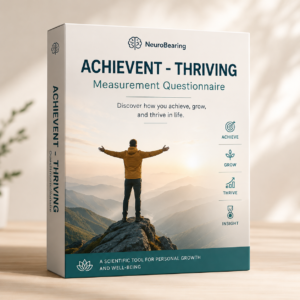

Achievement and Success: Understanding the Mindset Behind Long-Term Accomplishment
Achievement and Success: Understanding the Mindset Behind Long-Term Accomplishment
Meta Title
Achievement and Success: The Habits, Mindset, and Psychology Behind Reaching Your Goals
Meta Description
Discover the psychology of achievement and success. Learn how motivation, persistence, self-discipline, and personal habits influence long-term success, and explore how self-assessment can help you understand your achievement style.
Achievement and Success: More Than Reaching a Goal
Success is often described as the destination, while achievement represents the journey. Many people dream of accomplishing meaningful goals, whether they involve education, career advancement, health, financial security, relationships, or personal development. Yet while almost everyone desires success, not everyone approaches achievement in the same way.
Some individuals naturally enjoy setting ambitious goals and working steadily toward them. Others prefer smaller milestones, focusing on balance rather than competition. Some are energized by difficult challenges, while others become discouraged when obstacles appear. These differences are not signs of intelligence or worth—they simply reflect different patterns of motivation, personality, habits, and life experiences.
Understanding your own achievement style can help you make better decisions, choose realistic goals, and develop habits that support long-term growth.
What Does Achievement Mean?
Achievement refers to successfully reaching goals through effort, persistence, learning, and adaptation. It is not limited to professional accomplishments or financial rewards.
Achievement can include:
Completing an educational program
Learning a new language
Improving physical health
Building stronger relationships
Starting a business
Developing creative skills
Overcoming personal fears
Becoming more organized
Improving emotional wellbeing
For one person, achievement may involve leading a large company. For another, it may simply mean becoming more confident or establishing healthier daily routines.
True achievement is highly personal.
Defining Success on Your Own Terms
Society often presents success as wealth, status, or recognition. While these may be meaningful for some individuals, many people define success differently.
Success may involve:
Financial independence
Family happiness
Career satisfaction
Personal freedom
Helping others
Creative fulfillment
Good physical health
Emotional stability
Continuous learning
Living according to personal values
People who define success according to their own values often report greater life satisfaction than those who pursue goals primarily to meet external expectations.
The Psychology Behind Achievement
Psychologists have studied achievement motivation for decades. Research suggests that achievement is influenced by several interacting factors rather than one single personality trait.
These factors include:
Goal orientation
Self-confidence
Persistence
Self-discipline
Emotional regulation
Planning ability
Resilience
Curiosity
Conscientiousness
Growth mindset
No one possesses every strength equally. Instead, each person develops a unique combination of characteristics that shape how they approach challenges and opportunities.
Achievement Is Built Through Daily Habits
Many successful individuals appear highly motivated, but motivation alone rarely explains long-term achievement.
Instead, consistent daily habits often make the greatest difference.
Examples include:
Following routines
Managing time effectively
Prioritizing important tasks
Completing work even when motivation decreases
Learning from mistakes
Reviewing progress regularly
Maintaining healthy sleep and exercise habits
Small improvements repeated consistently often produce remarkable long-term results.
Motivation: The Engine Behind Action
Motivation helps initiate action, but it changes over time.
Psychologists generally distinguish between two broad forms of motivation.
Intrinsic Motivation
This comes from genuine enjoyment or personal interest.
Examples include:
Learning because you enjoy knowledge.
Exercising because it feels rewarding.
Creating art because it is meaningful.
Intrinsic motivation often supports long-term persistence.
Extrinsic Motivation
This comes from external rewards.
Examples include:
Salary
Grades
Promotions
Recognition
Awards
External rewards can be effective, particularly for short-term goals, but many people perform best when both intrinsic and extrinsic motivations work together.
The Role of Persistence
Almost every significant accomplishment involves setbacks.
Persistence allows people to continue despite:
Failure
Criticism
Delays
Uncertainty
Unexpected obstacles
Persistence does not mean refusing to change direction. Instead, it involves adapting while remaining committed to meaningful goals.
Many highly successful people describe repeated failures before eventually reaching their objectives.
Self-Discipline Versus Motivation
Motivation determines whether you begin.
Self-discipline determines whether you continue.
People with strong self-discipline often:
Complete tasks despite distractions.
Keep promises to themselves.
Resist short-term temptations.
Follow schedules consistently.
Maintain progress during difficult periods.
Developing discipline often has a greater long-term impact than waiting to feel motivated.
The Importance of Goal Setting
Clear goals provide direction.
Research suggests that effective goals are often:
Specific
Measurable
Realistic
Challenging
Time-oriented
Large goals become more manageable when divided into smaller milestones.
Each completed milestone reinforces confidence and creates momentum.
Learning From Failure
Failure is often misunderstood.
Rather than indicating permanent inability, failure frequently provides valuable information.
Questions worth asking include:
What worked?
What didn’t work?
What can I improve?
What resources do I need?
Should I adjust my strategy?
Individuals who view setbacks as opportunities for learning often recover more quickly than those who interpret failure as evidence of personal inadequacy.
Confidence and Achievement
Confidence influences whether people attempt difficult tasks.
Healthy confidence develops through experience rather than wishful thinking.
Confidence grows when individuals:
Practice consistently.
Develop skills.
Solve problems.
Complete meaningful goals.
Learn from mistakes.
Small successes gradually build larger confidence.
The Value of Continuous Learning
Successful people often remain lifelong learners.
Learning may involve:
Reading books
Taking courses
Seeking mentors
Asking questions
Developing new skills
Reflecting on experience
Curiosity encourages continuous improvement and helps individuals adapt to changing circumstances.
Comparing Yourself to Others
Comparison is natural but can become unhelpful.
Social media often presents carefully selected highlights rather than everyday reality.
Instead of asking:
“Why am I behind?”
Consider asking:
“What progress have I made compared with six months ago?”
Personal growth is generally a more useful comparison than competing with others.
Achievement and Wellbeing
Achievement should support wellbeing rather than replace it.
Constant overwork without rest may eventually contribute to:
Burnout
Chronic stress
Fatigue
Reduced creativity
Lower productivity
Healthy achievement balances ambition with recovery, relationships, physical health, and emotional wellbeing.
Long-term success is difficult to sustain without maintaining overall wellness.
Can Achievement Be Developed?
Yes.
Although personality influences achievement, many supporting skills can be strengthened through practice.
Examples include:
Better planning
Improved organization
Stronger time management
Increased emotional regulation
More effective communication
Consistent habits
Reflective thinking
Goal review
Growth often occurs gradually rather than dramatically.
Why Self-Assessment Can Be Helpful
People frequently underestimate or overestimate their own strengths.
Structured questionnaires encourage reflection by exploring areas such as:
Goal orientation
Persistence
Organization
Motivation
Confidence
Work habits
Emotional responses
Personal values